
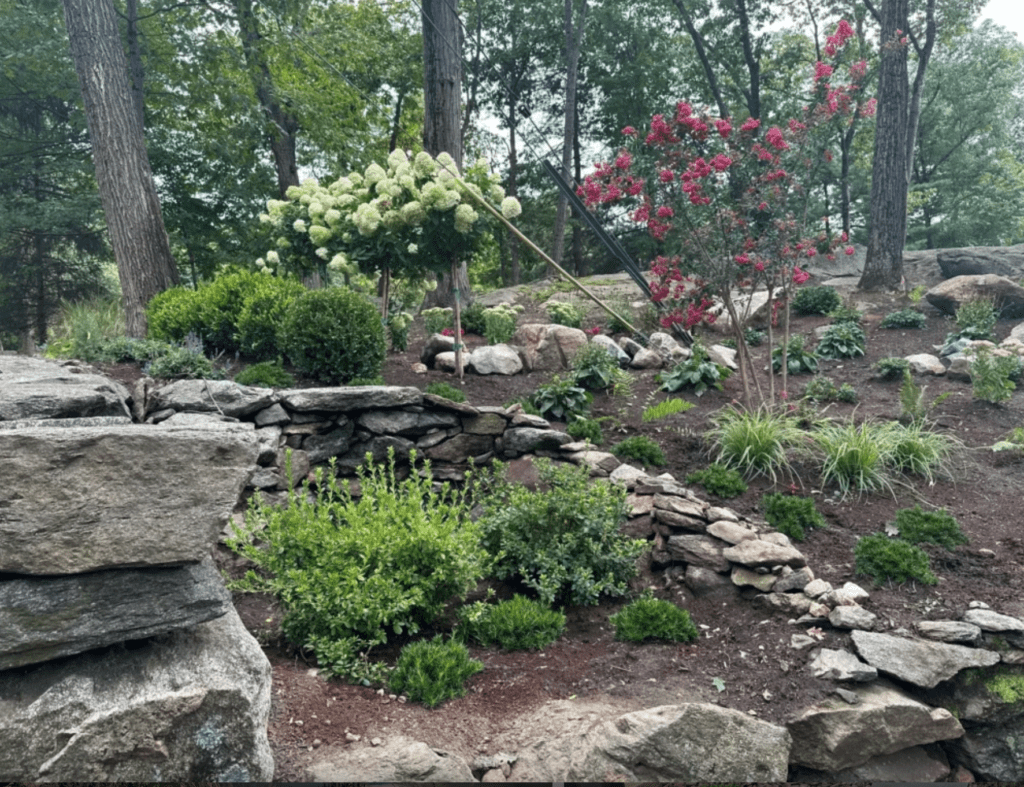
Spring Has Arrived in Westchester. Your Landscape May Not Be Ready.
Spring in Westchester arrives with a certain confidence. The forsythia blooms everywhere, the temperatures climb, and suddenly every homeowner in the county is standing in their backyard squinting at the ground, wondering what happened over the winter.
The answer, most of the time, is quite a bit.
Frost heave shifts stone. Freeze-thaw cycles compact soil. Winter runoff leaves behind erosion patterns that didn’t exist in November. A yard that looked fine going into December can come out of March looking like it has something to answer for.
None of this is cause for panic, but it is cause for looking closely before you start planting, mulching, or making any calls to a nursery.
First, Walk Before You Plant
The single biggest mistake Westchester homeowners make in spring is moving too fast. The calendar says April. The garden center is open. The impulse to “do something” is strong.
Resist it, at least for a week or two.
Before any new plant goes in the ground, walk the property and pay attention to what the landscape is telling you. Where did water pool after the last heavy rain? Are there spots where mulch washed out? Is there a low area near the patio that seems permanently soft?
These are not decorating problems. They are structural ones, and planting around them rather than addressing them is the landscaping equivalent of hanging art over a water stain.
Good spring planning starts with observation, not action.
What to Actually Look For
A post-winter property inspection does not require expertise, just a little patience and an honest eye. Here is what tends to matter most in Westchester:
Grading and drainage
Did any areas settle over the winter? Does water move away from the home, or toward it? Even subtle shifts in grade can redirect runoff in ways that compound over time. If something looks off, it probably is.
Hardscape surfaces
Patios, walkways, and stone steps take a beating from freeze-thaw cycles. Look for surfaces that have shifted, settled, or heaved. Small problems addressed now stay small. Left alone, they tend to become larger ones, and more expensive ones.
Planting beds
Winter can be unkind to mulch. Thin coverage leaves soil exposed to erosion and temperature swings. Before adding new plants, check whether existing beds need to be refreshed and properly edged first.
Lawn areas
Compacted, saturated turf is not ready for heavy foot traffic or early mowing. Let it dry and breathe before you start working it. Rushing this step tends to make soil compaction worse, not better.
Existing plants
Some shrubs and perennials that look dead in early spring are simply slow to wake up. Others are genuinely gone. Wait for a few weeks of warmth before making any removal decisions. You may be surprised by what comes back.
When to Plant (And When to Wait)
Timing in Westchester is everything. The Hudson Valley climate is real. Late frosts can arrive well into April, and planting too early can undo weeks of effort in a single cold night.
As a general rule:
- Cool-season perennials and ornamental grasses can go in once nighttime temperatures are consistently above freezing. Typically mid-April in most Westchester zip codes.
- Tender annuals and tropicals should wait until after the last frost date, which in Westchester typically falls around mid-May.
- Trees and shrubs can be planted earlier in spring, as their root systems are more forgiving of cool soil temperatures. That said, they still need proper site preparation and consistent watering through establishment.
The most expensive plants in your landscape are the ones that go in at the wrong time, in the wrong place, without the right preparation. Patience is not inaction, it’s good judgment.
Spring Is Also the Right Time to Rethink
One underappreciated aspect of early spring is that it offers a rare window of clarity. Before the foliage fills in and the perennials take over, you can actually see the bones of a landscape, how spaces connect, where the eye travels, what is working and what has simply been tolerated for too long.
If a part of your property has quietly bothered you for a few years, the awkward transition between the patio and the lawn, the slope that never quite looks right, the front entry that lacks presence, etc. Spring is the time to think about it seriously, not just push through another season hoping it improves on its own.
A thoughtful landscape does not happen by accident. It happens when someone steps back, looks at the whole property, and asks better questions.
A Note on Westchester Specifically
Westchester County properties come with their own set of considerations: varying soil conditions, sloped terrain, mature trees with complex root systems, and homes that range from midcentury moderns to historic colonials. What works in a flat, newer-construction suburb does not always translate here.
Knowing the site matters.
A plant that thrives in full sun on a south-facing slope in Rye may
struggle in the part-shade of a wooded lot in Chappaqua. Drainage solutions that work on a flat Scarsdale property may need a completely different approach on a sloped backyard in Tarrytown.
The specifics of the property should drive the decisions, not generic advice from a catalog or a well-meaning neighbor.
Ready to Talk About Your Property?
At DGD Landscape Designs, spring planning starts with a real conversation about your specific site, what it needs, what is possible, and what will actually make it better. Whether you are addressing a drainage issue, refreshing tired planting beds, rethinking a hardscape area, or simply wondering where to start, we can help you see the property clearly and move forward with intention.
Contact DGD Landscape Designs to schedule a spring consultation.