
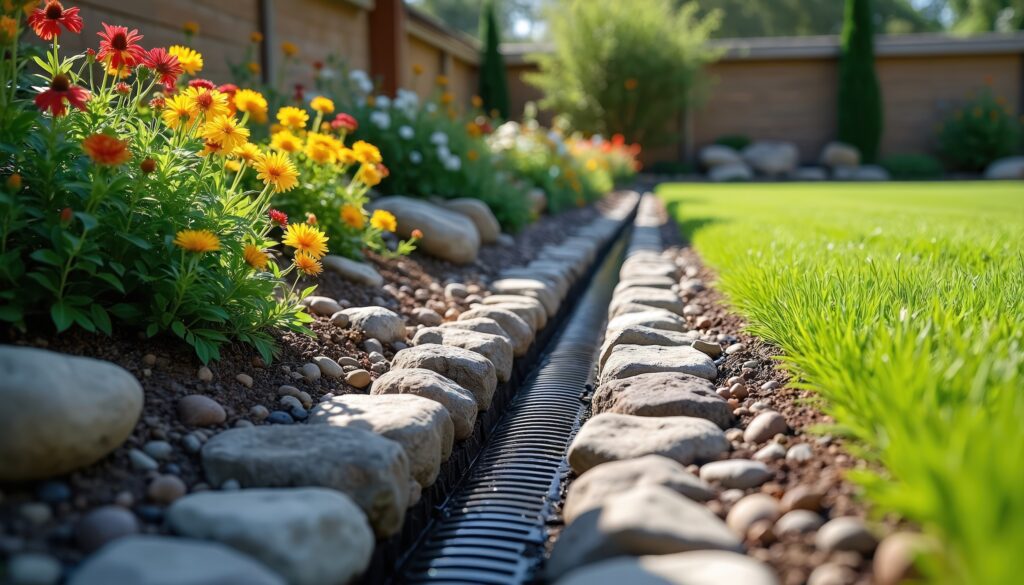
Landscape Drainage Solutions for Westchester County Homes
Water where it should not be is one of the fastest ways to undermine an otherwise beautiful property. A yard can have strong planting, handsome stonework, and a well-designed layout, but if drainage is poor, the entire landscape can start to feel compromised.
Puddling, erosion, soggy lawn areas, washed-out mulch beds, and water collecting near patios or walkways are not just annoyances. They often point to a bigger issue in how the landscape is graded, planned, and built.
For homeowners in Westchester County, drainage problems are especially important to address early. A property with poor runoff management can become harder to use, harder to maintain, and more vulnerable to damage over time. The right landscape drainage solutions do more than move water away. They help protect the structure of the landscape, preserve the beauty of the property, and support a healthier, longer-lasting outdoor environment.
At DGD Landscape Designs, drainage is not treated as an afterthought. It is an essential part of thoughtful landscape planning. Good drainage should work quietly in the background while the overall design still feels natural, refined, and connected to the home. That balance is what turns a problem area into a landscape that looks better and functions better.
Why Landscape Drainage Matters
Many homeowners first notice drainage issues when water starts pooling in the lawn or around a patio after heavy rain. Others notice softer warning signs: beds that stay too wet, patches of turf that struggle, mulch that washes away, or stone areas that shift and settle. In some cases, the problem shows up near the foundation, around walkways, or at the base of steps where water repeatedly collects.
These are not just maintenance issues. They are often signs that the property needs better grading, better water management, or a more complete landscape drainage plan. Left unaddressed, poor drainage can affect the usability of the yard, the health of the planting, the stability of hardscape elements, and the long-term performance of the landscape as a whole.
That is why landscape drainage solutions in Westchester County should be approached with both function and design in mind. The goal is not simply to “get rid of water.” The goal is to direct water properly while preserving the integrity, comfort, and appearance of the property.
Common Signs of Drainage Problems on a Westchester County Property
Homeowners do not always realize that a drainage issue is developing until it becomes harder to ignore. Some of the most common signs include:
- Standing water that lingers long after rainfall
- Wet or muddy lawn areas that never seem to dry properly
- Water collecting near patios, walkways, or retaining walls
- Mulch, soil, or gravel washing out of beds
- Erosion on slopes or uneven parts of the yard
- Water running toward the home instead of away from it
- Planting areas that look stressed from too much moisture
- Stone surfaces that settle or shift over time
Any one of these can point to a drainage issue. In some cases, several of them are connected. A poorly graded yard may affect lawn health, planting performance, and hardscape stability all at once.
What Causes Poor Drainage in a Landscape?
There is no single cause in every yard. Most drainage problems come from a combination of site conditions, layout decisions, and aging landscape elements. Some properties were never graded correctly to begin with. Others evolve over time as patios are installed, planting beds are changed, soil compacts, or runoff patterns shift.
A few common causes include:
Improper Grading
Grading is one of the most important parts of a successful landscape. If the yard slopes in the wrong direction, water will naturally move where it should not. Even subtle grading issues can lead to serious drainage problems over time.
Compacted Soil
When soil becomes compacted, water has a harder time soaking in. Instead of being absorbed gradually, it runs across the surface and collects in low areas. This can be especially frustrating in lawns and high-traffic areas.
Poorly Planned Hardscape
Patios, walkways, and stone features should be beautiful, but they also need to work with the natural movement of water. If they are installed without careful drainage planning, they can push water toward the home, trap runoff, or create pooling around the edges.
Low Spots and Surface Depressions
Even a well-designed property can develop low areas where water repeatedly gathers. These depressions may seem minor at first, but over time they can make parts of the yard difficult to use and maintain.
Inadequate Drainage Around Planting Beds
Planting design is not just about appearance. It also needs to account for soil conditions, runoff, and how moisture moves through the property. Beds that stay too wet can struggle, even when the plant selection is otherwise strong.
Landscape Drainage Solutions for Westchester County Homes
The best solution depends on the property. Good drainage work is not one-size-fits-all. It should respond to the architecture of the home, the grade of the land, the material palette, and the way the outdoor spaces are meant to function.
Below are some of the most effective landscape drainage solutions for Westchester County homes.
Grading and Resloping
In many cases, the most important drainage improvement is grading. Reshaping the land so that water flows away from the home and away from problem areas can dramatically improve how the property performs. Proper grading creates the foundation for everything else, from planting design to patios and walkways.
Drainage Planning as Part of Landscape Design
The strongest landscapes are designed with drainage in mind from the beginning. Instead of treating runoff as a separate problem, it is built into the layout of the site. That means looking at elevations, transitions, surface materials, planting zones, and the way different parts of the yard connect.
Patios and Walkways That Manage Water Properly
Hardscape should never fight the site. Patios and walkways should be installed with the right slope, drainage strategy, and material choices so they remain attractive and usable without contributing to runoff problems.
Planting That Supports Better Landscape Performance
Thoughtful planting can help stabilize soil, soften runoff, and make drainage solutions feel more integrated into the overall property. The right planting design can improve both appearance and function, especially on slopes and transition zones.
Stonework and Site Elements That Work With the Grade
Stone walls, edging, steps, and other masonry elements should reinforce the structure of the landscape, not interrupt natural drainage patterns. When site elements are placed carefully, they can help support a cleaner, more stable outdoor environment.
Why Drainage Should Never Be an Afterthought
A common mistake is waiting until a drainage problem becomes severe before addressing it. By that point, the issue may already be affecting lawn health, plant performance, hardscape surfaces, or the usability of outdoor spaces. Quick fixes can help in the short term, but they often do not solve the root cause.
That is why it makes sense to approach drainage through a landscape design lens. When grading, planting, stonework, and layout are considered together, the result is stronger. The landscape does not just drain better. It feels more intentional and more complete.
This matters for homeowners who want an outdoor environment that is both beautiful and durable. A landscape should be able to handle rainfall, seasonal changes, and daily use without looking tired or becoming difficult to manage.
The Design Advantage
Not every drainage solution needs to look engineered or utilitarian. In fact, some of the best results come when water management is integrated so naturally into the design that it is almost invisible. A well-planned landscape can guide runoff, protect surfaces, and support plant health while still feeling elegant and understated.
That is one reason homeowners often benefit from working with a landscape design professional instead of treating drainage as a narrow repair issue. A design-led approach looks at the entire property: the home, the outdoor living spaces, the plantings, the materials, and the way the land wants to function. From there, the right drainage strategy can be developed in a way that feels cohesive rather than patched together.
Choosing the Right Landscape Drainage Solutions in Westchester County
Every property is different. A flat lawn area, a sloped backyard, a stone terrace, and a front entry walk all present different drainage challenges. The right solution should be based on how water moves through that specific site, not on a generic fix.
For homeowners in Westchester County, the most effective landscape drainage solutions are the ones that support the property as a whole. They protect the home, preserve the investment in the landscape, and improve how the outdoor spaces look and feel over time.
Work With DGD Landscape Designs
At DGD Landscape Designs, landscape drainage is approached as part of the larger design picture. Whether a property needs better grading, improved runoff planning, or a more thoughtful connection between planting, stonework, and outdoor living areas, the goal is the same: to create a landscape that functions beautifully and feels true to the home and the place.
If your property is dealing with standing water, runoff issues, wet lawn areas, or drainage problems around patios and planting beds, DGD Landscape Designs can help develop a more thoughtful solution. Contact DGD to discuss landscape drainage solutions for your Westchester County home.